PostPilot Case Study | Scaling a DTC Design Function
←︎ All case studies

PostPilot: Building a design function from nothing

I joined PostPilot before design was really a department. What started as a chat box, a Google Form, and a very questionable design editor became a 17-person team producing 75+ designs a day across 40+ accounts.

Team Leadership Creative Systems Professional
PostPilot direct mail design case study by Julia Lisboa
tl;dr

I joined PostPilot before design was really a department.

Clients requested design through a chat box, filled out a Google Form, and received files through Customer Canvas, which looked a little too much like Microsoft Word for comfort.

As the company grew, that stopped being enough. I helped turn loose requests into actual briefs, scattered files into organized storage, repeated mistakes into QA checks, and one-person context into systems the whole team could use.

Role
Design Lead / Founding Designer
Company
PostPilot
Timeline
2021–Present
Scope
Creative leadership, DTC campaigns, direct mail systems, QA, team scaling
Leadership
17 designers led · 27 designers onboarded
Operations
~95% on-time delivery · most first drafts within 24h
Review system
70% of designs moved from a 4-step review process to a 2-step review flow, supported by a proprietary QA agent trained on our team’s work and standards.

My contribution

I designed early campaigns hands-on, helped define what a usable brief looked like, built QA and handoff systems, organized file storage, contributed to intake processes, helped shape a shared design library, onboarded designers, and later led a distributed team of 17 designers.

No system. No specs. Just a chat box and hope.

When I joined PostPilot as founding designer in 2021, design was not a department yet. It was a service clients could request through a chat box.

The early flow was fragile: a client asked for design help, filled out a Google Form, and, with some luck, gave us enough assets to work with. Then the final design went into Customer Canvas, a platform that looked a little too much like Microsoft Word for anyone's peace of mind.

It worked because it had to. But it was not a system. It was a series of places where context could disappear.

Soon after I arrived, PostPilot started hiring account managers. That forced the first real shift: we stopped treating design like a request box and started building actual brief requirements. What does the designer need? What does the client need to provide? What does “ready for design” even mean?
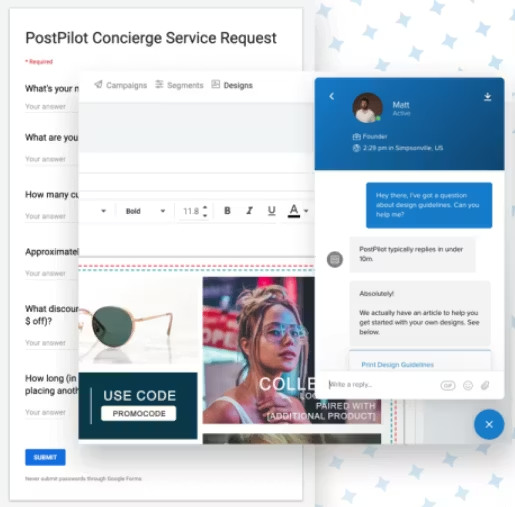
Early customer touchpoints: PostPilot early design request flow with chat, Google Form, Customer Canvas editor, and postcard preview

Early customer touchpoints: a chat box, a Google Form, Customer Canvas, and enough missing context to make a designer age five years in one afternoon.

The system came from the mess.

Nothing started as a clean operations plan. Most of the system came from something being annoying, fragile, or one step away from becoming a real problem.

Files were the first obvious one. We were making more work, for more clients, with more people touching the same campaigns. We needed a place where assets, exports, references, and final designs would not vanish into someone's downloads folder.

That became shared storage. Then shared storage became a real archive. Today, we have 1,000+ campaign designs filed, organized, and available to the wider team, so people can find past work without turning every search into a Slack investigation.

Then it was briefs. Then handoff. Then QA. Then onboarding. Then review.

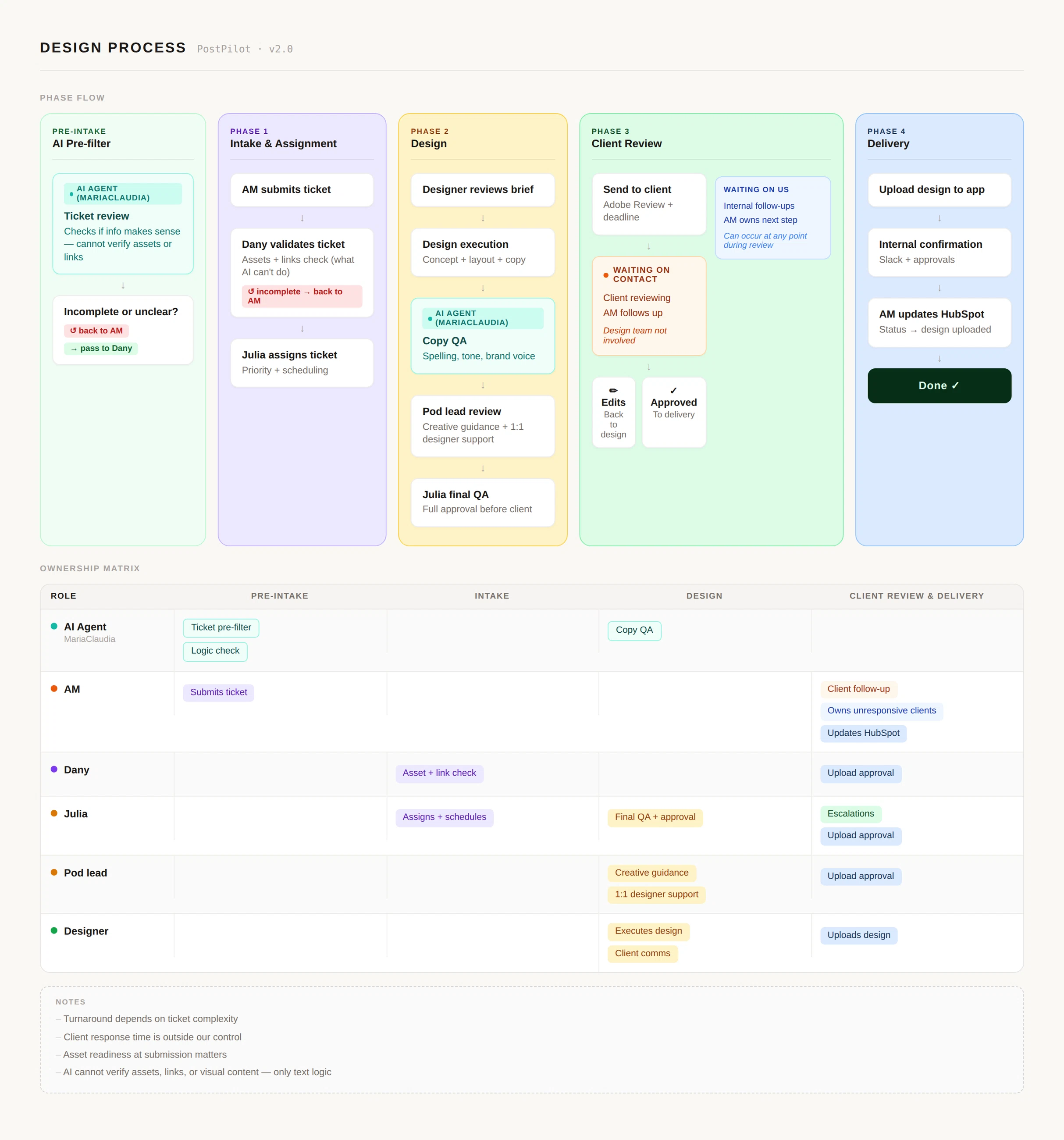
As we hired more account managers and designers, the workflow moved from a basic ClickUp setup into a multi-layered HubSpot system with intake forms, automated pipelines, and clearer ownership.

More recently, that system became AI-supported. Our agents are trained on our work, standards, and client-specific rules. They quality-check briefs, proof copy, move work through the pipeline, and clear tickets before they reach design.

The point is not “AI does design now.” It doesn't. The point is that designers should not spend their best hours checking if the brief is missing a CTA, if the copy has a typo, or if a client rule was already documented somewhere.

Most of the process came from asking, “Do we really want to solve this same problem again next week?”

Workflow documentation: PostPilot design workflow documentation showing intake, review, QA, delivery, and AI-supported checks

Workflow documentation for intake, review, QA, delivery, and AI-supported checks. The boring parts are doing a lot of the heavy lifting here.

A design system, but for direct mail reality.

We also built a shared library of reusable elements: layouts, modules, treatments, production-safe patterns, and pieces designers could pull from without starting from zero every time.

It's not a precious design system with perfect components living in a vacuum. It's more practical than that.

Direct mail moves fast. Clients repeat offers. Formats repeat. Legal notes repeat. QR codes, codes, badges, claims, disclaimers, and product grids all need to work again and again without looking like the same card forever.

The shared library gave designers a starting point without taking away judgment. It helped the team move faster, keep work consistent, and spend more time deciding what should be custom.

Natural Catch: simple enough to keep working.

Natural Catch came in early, when a lot of briefs were still closer to conversations than structured requests.

It's a sustainable seafood brand, which is not the most obvious fit for direct mail. The account manager and I talked through possible directions, and I built the concept around tuna-related wordplay.

There wasn't a giant strategy deck behind it. It was taste, timing, and knowing when something had enough charm to be mailed.

The campaign worked. More importantly, it kept working.

Four years later, the same creative is still live.

That doesn't mean every direct mail campaign should last forever. Most should be tested, changed, killed, or rebuilt. But when something simple keeps performing for that long, I pay attention.

The best-performing idea isn't always the loudest one. Sometimes it's the one people keep using four years later.

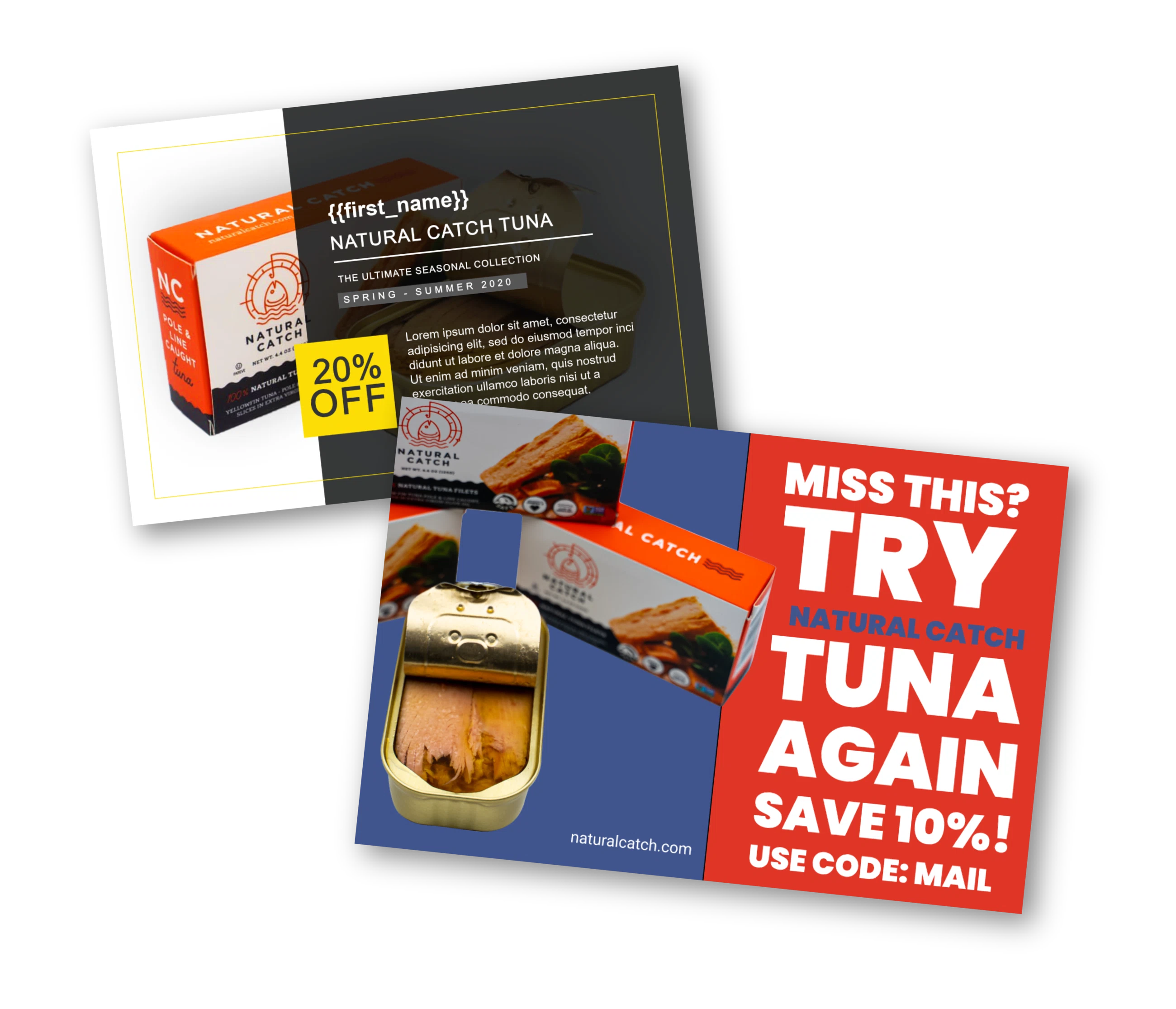
Original Natural Catch direct mail campaign before redesign

Before: first version designed by the client and account manager before I was hired.

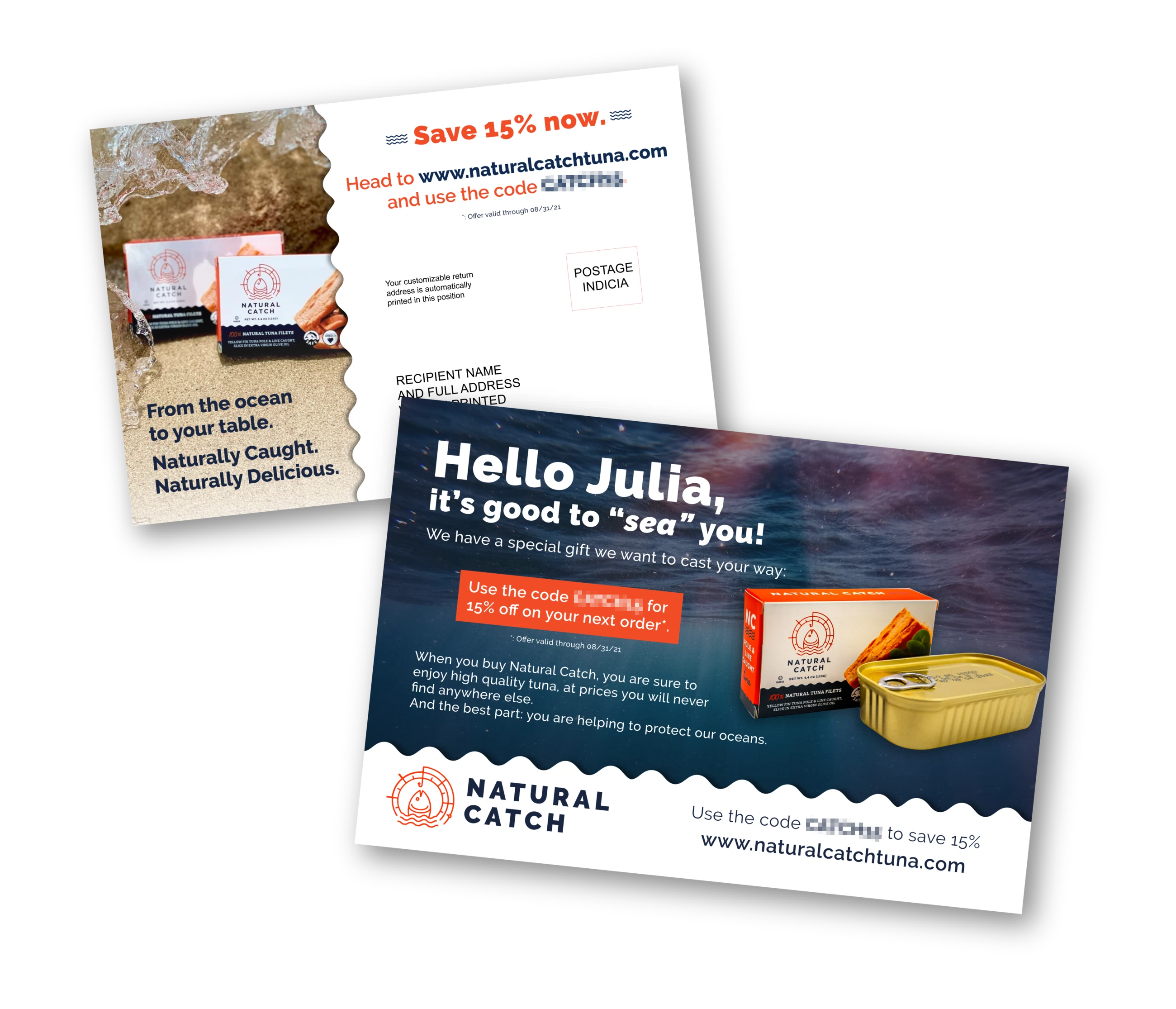
Julia Lisboa redesign for Natural Catch direct mail campaign

After: my redesign. Simple, direct, and still running four years later.

Period ROAS Revenue CPA
Year one ~21x $451k $3.56
All-time ~19x avg. $3.38M

The point isn't that one postcard explains the whole business. It doesn't. But it's a useful proof point for the kind of work I value: clear enough to ship, strong enough to test, and simple enough to keep using.

From one designer to a full operation.

Today, the team is 17 designers across multiple time zones, supporting 40+ accounts and producing more than 75 designs a day.

That volume only works because the work has a system under it: brief requirements, organized storage, shared libraries, QA, handoff, review standards, and AI agents checking the things humans should not have to check manually forever.

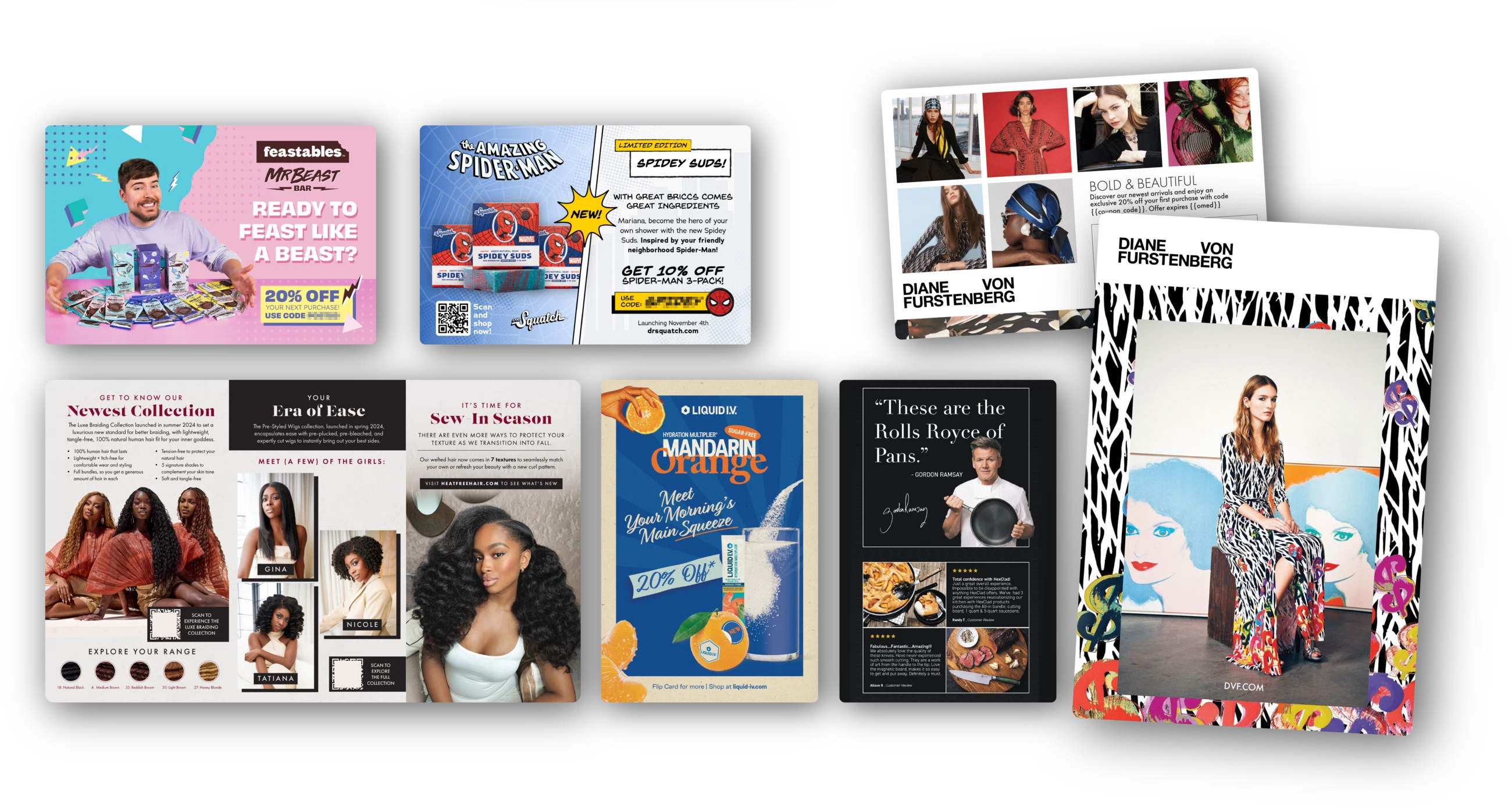
PostPilot also grew around that work: Klaviyo's only Premier direct mail partner, Inc. 5000 three years running, and a client base ranging from independent DTC brands to Liquid I.V., Cozy Earth, Anastasia Beverly Hills, Feastables, Dr. Squatch, HexClad, and Diane von Furstenberg.

I do not want this to read like I personally caused every company milestone. I didn't. But I did help build the design function that made this level of creative volume possible without everything depending on one person's memory.

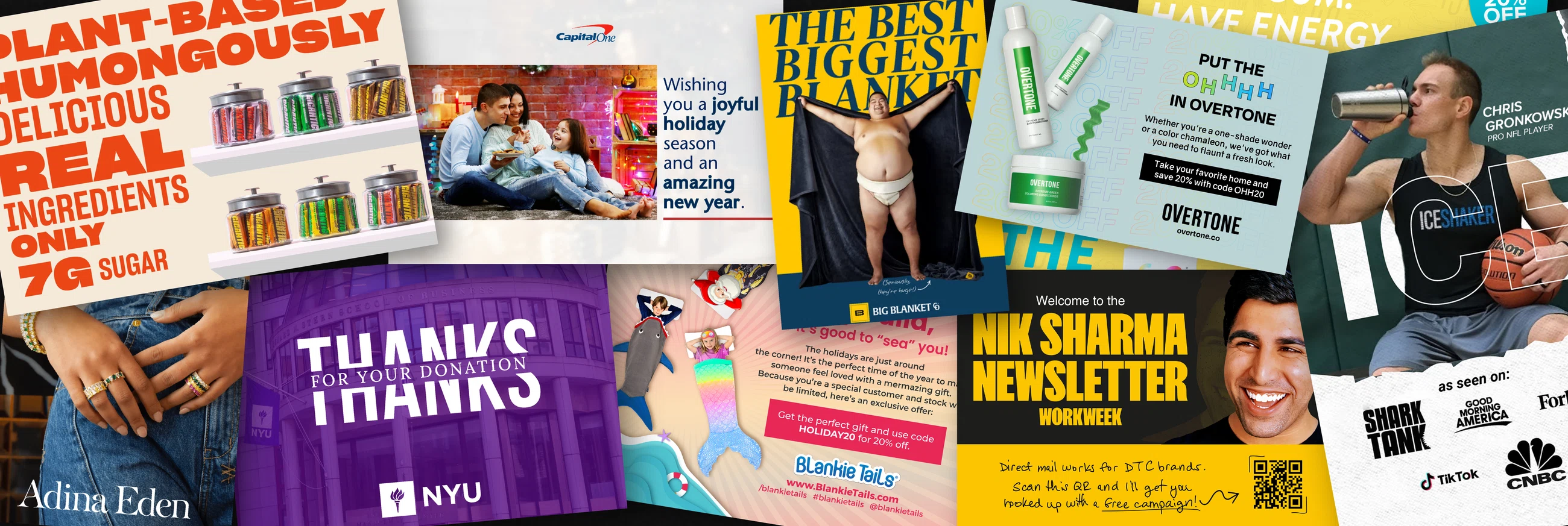
PostPilot direct mail campaign examples across DTC brands

Campaign work across hundreds of brands, spanning fashion, beauty, CPG, food, wellness, licensed collaborations, and retention programs.

The goal was never just the campaigns.

The campaigns matter. They are what clients see, approve, test, print, and send.

But the work I am proudest of is the system behind them: the brief that arrives with enough context, the file that someone can find six months later, the QA check that catches a mistake before a client does, the shared library that saves a designer an hour, the handoff that lets another timezone keep moving.

That is the less shiny part of design leadership, but it is the part that keeps a team alive at scale.

I joined when design was basically a person. I helped turn it into a team, then a function, then an operation that can keep moving without everything depending on one brain.

The real case study is not “I made a lot of designs.” It is “I helped build the conditions for a lot of good design to keep happening.”

More case studies

Keep going.

View all →︎
Contact

Let's build something together.

Message sent

Great to hear from you! I'll get back ASAP.

Made with by Julia Lisboa Frankfurt · Vancouver · Rio